

It’s remarkable, really, how the state of a closet—tucked away behind a door we mostly ignore—can worm its way into the clarity (or confusion) of our workday thoughts. Stumbling across that stuffed closet, overflowing with retired peripherals, apostate pens, and forms that went out of date years ago, the mind falters. Focus drifts. I’ve often noticed that the less time I spend on such disorder, oddly enough, the more time I seem to waste chasing down a single AA battery or the last working notepad.
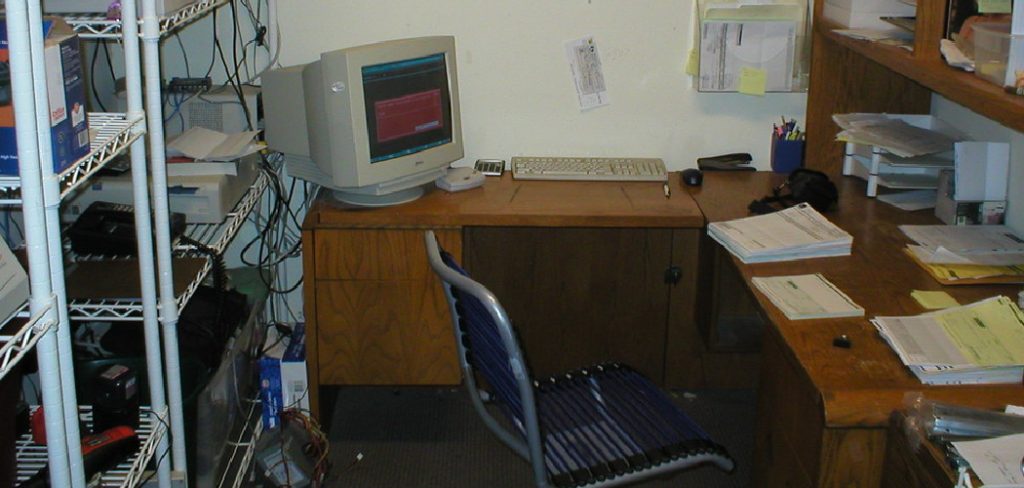
Some will argue that organizing this hidden mess is itself a distraction; I’d counter that ignoring it renders the rest of your efforts slightly, insidiously harder. Reclaiming this space isn’t a matter of imposing some impersonal “system.” It’s about negotiating with yourself, nudging routines, and—maybe most importantly—giving every object you actually need a rightful home. That’s all this guide aims to do: provide real, lived-in strategies for taking back your storage, one deliberate decision at a time. In this guide on how to organize an office closet, we’ll cover everything from decluttering and sorting to creating an efficient storage system.
Empty and Assess the Closet Space
Resist the urge to shortcut this part—you have to start with nothing in the closet. Absolutely everything comes out, no exceptions. Set up a landing zone; maybe the floor works, or a table, but leave yourself space to move around and, more importantly, to see the total scope of what you’ve accumulated. There’s a special sort of discomfort in confronting years of “I’ll deal with it later,” but that discomfort is instructive. You learn, very quickly, just how many ballpoint pens you’ve gathered (dried up, half-missing caps), and how your stash of outdated IT gear only ever seems to grow.
While the closet lies bare, give it a once-over. Wipe away the dust, check for shelves that wobble, and make mental notes. Has the ceiling bowed a bit? Are some shelves more suggestive than service? Knowing the closet’s exact shape and quirks—height, shelf span, the peculiar dip where older flooring wasn’t laid quite right—will spare you a headache when you buy new containers or consider whether the old printer will ever really fit back in.
Sort and Declutter Office Items
Once everything’s laid out, resist the urge to shove it all back. Sorting isn’t about neat piles—it’s about revelation. Lumping together batteries, writing tools, cables, files, and the mysterious category of “personal effects,” you’ll notice the excesses laid bare. It can feel a little embarrassing to think about how many duplicate highlighters or conference swag notebooks have survived, usually unscathed, for years. Ask yourself—do you really use these, or are they just reminders of time gone by?
Set up clear stations: keep (essentials, tools you reach for weekly), donate (in working order, but not in your regular rotation), and toss (broken, obsolete or expired). I can’t tell you how freeing it is to finally bin those dried markers or shredded spare mousepads. Only what directly supports your current working life gets to go back in. Everything else is future clutter.
7 Simple Steps on How to Organize an Office Closet
Step 1: Rethink Your Categories
Every organizing push seems to start with categories, but who actually uses the categories prescribed by storage blogs? Rather than, say, lumping “miscellaneous electronics” together, observe how you work. I keep mailing supplies—tape, labels, stamps—clustered, since I use them in one go. Perhaps your cables ought to live with spare power banks, instead of in a generic “electronics” bin. Let your real habits guide your bins.

Intentional groupings ward off the dreaded junk drawer effect. For instance, if you’d rather reach for printer paper and binders together before a presentation, store them that way. Forced order never lasts, but reasonable categories—grounded in how you actually move through the office—tend to stick.
Step 2: Storage Containers—Choose Carefully
It’s weirdly tempting to buy fashionable bins before you’ve finished sorting, but containers should fit your closet, not the other way around. I’ve found clear bins suit small stuff—paperclips, markers—since you can see if you’re running low without further fuss. Messier or bulky things (cables, chargers, that backup keyboard) are best hidden in opaque boxes. Woven baskets are nice too, although eventually they’ll show their age.
Flimsy cardboard may hold for a bit, but bulky reams of paper or hardware will break them down sooner or later. Opt for solid, plastic bins or sturdy fabric crates you can drag off a shelf without worry. If you’re often digging for supplies up high, handles are no luxury. I suppose some part of me notices, too, that functional often outlasts fashionable—go for lasting utility.
Step 3: Look Up—Use Vertical Space
One obvious but overlooked move: use the closet’s height. Lower shelves inevitably crowd first. Adjust shelf gaps if you can. Stacked, sliding organizers handle tiny objects much better than giant open bins. Don’t ignore the air gap above a box—it’s prime real estate if you find just the right undershelf basket. Over-the-door organizers can corral random bits (scissors, tape rolls, old phones), keeping them visible instead of vanishing at the back.
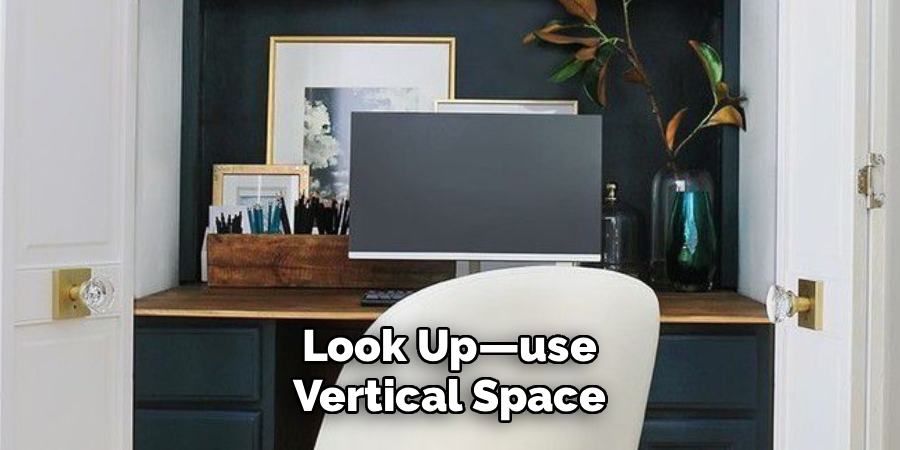
There’s an art to layering storage—sometimes crowded looks organized, but functions as a roadblock. Consider accessibility, not just maximum volume.
Step 4: Labels—Not Just For You
An organization falls apart fastest when only the organizer knows what goes where. Anyone else—colleague, family member, future-you—gets lost instantly. Print crisp labels, either with a label maker or pen, and don’t be afraid to be specific. “Paper” is vague. “Photocopy paper” or “envelopes” is actionable. If you rotate inventory often, consider chalkboard or whiteboard tags that can be rewritten without fuss.
A decent labeling system, honestly, is the only thing keeping shared closets sane. Otherwise, entropy returns with haste.
Step 5: Assign Tasks to Zones
I once read somewhere that your closet ought to work like a micro-warehouse. Place frequently-used items at easy reach—roughly eye or hand-level. Avoid stooping or climbing for your daily essentials; save stretching for special occasions. Regular supplies (printer cartridges, new files, envelopes) can live just above or below that main “zone of convenience.”
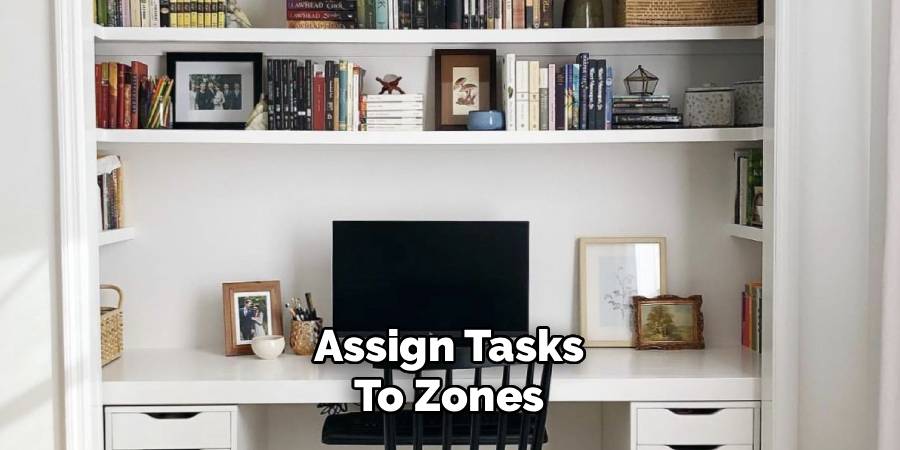
Reserve the topmost shelves and floor space for things you seldom need. Tax records, old project folders, the holiday décor that only re-emerges annually—they all belong up high. Floor space? Leave it to the weighty stuff: stacks of printer paper, recycling bins, or the ancient paper shredder.
Step 6: Top-Shelf Storage for Occasional Use
Not everything needs to be close by. Use your highest shelves for long-term storage—spare tech, out-of-season supplies, archived manuals. Getting things down may require a stepstool (worth investing in a stable one, by the way). Heavy or loose items should sit securely, always in sturdy containers. It’s best to label those high-up boxes so you can check contents from below (your future self will thank you).
Frequency of use dictates placement—when in doubt, the harder it is to reach, the less often you should need it.
Step 7: Set a Realistic Maintenance Rhythm
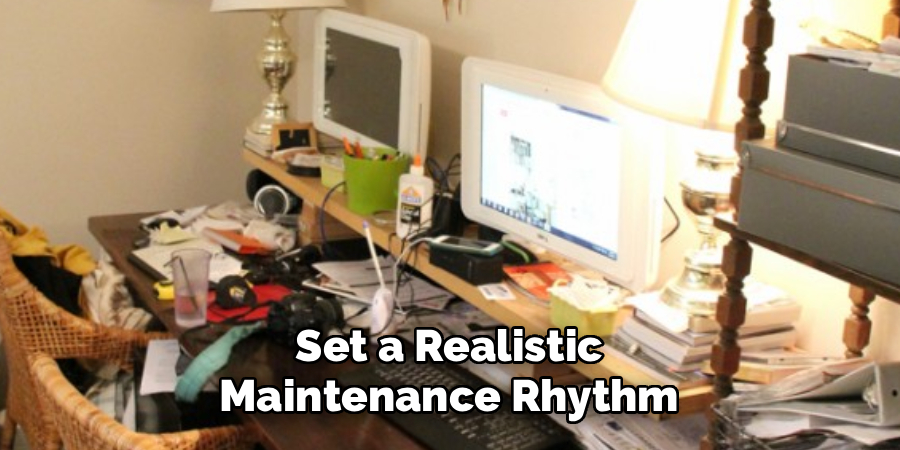
Here’s where a lot of attempts fail. Organization is not, as much as we’d wish, a “set and forget” endeavor. A weekly pass—just ten minutes—restores order. Return vagrant pens to their bin, recycle junk mail, and nudge displaced boxes back into line. Every few months, do a bigger reassessment: are you still mailing as many packages, or has your workflow changed? Adjust zones or categories to fit new habits. Without this, even the tidiest closet slides back into entropy soon enough.
Following these steps on how to organize an office closet will not only help keep your space clean and clutter-free, but it can also increase productivity and decrease stress levels.
Common Pitfalls
It’s easy to buy containers before you actually know what you need to store; these containers never quite fit, and haphazard labeling (or none at all) means you’ll be rooting through a graveyard of anonymous bins a month later. Heavy objects up high?
Don’t even think about it. Sooner or later, you’ll regret it. And leaving no “buffer space” for new purchases is a guaranteed source of future mess. It’s the little lapses, not grand mistakes, that undermine the whole effort.
Stretching Your Dollar—Organization on a Budget
Specialty organizers are alluring, but you almost certainly have what you need already. Plain shoeboxes, prettied up with some wrapping paper or labels, compete with most commercial bins. Glass jars from the kitchen—pasta sauce or jam, take your pick—are perfect for storing thumbtacks or binder clips. Old boxes can be carved up for drawer dividers.
If you’re strapped for cash, watch for filing cabinets or wire baskets at the thrift store or in local classifieds; a coat of paint can make a battered look bespoke.
Frequently Asked Questions
Q1: So, How Often Should You Overhaul Your Office Closet?
Weekly tidying suffices for most, but a seasonal (every three or four months) deep clean helps adapt to changing routines and prevents those sneaky piles of unneeded clutter from accumulating in forgotten corners.
Q2: What About Bins for Heavy Stuff?
Skip the cardboard, honestly—it barely survives more than a few months with reams of paper or piles of cables inside. Sturdy plastic or heavy-gauge wire baskets are your friend. Handles that don’t dig into your fingers make everything easier. You’re less likely to drop a heavy tote if, you know, it doesn’t hurt to pick up.
Q3: Any Tips for the Epidemic of Tangled Cords?
It’s a plague. Velcro wraps make a difference, as do “cord tacos” (flap snaps you can make yourself, if you’re handy). Hang these in a clear shoe organizer, label each pocket, and never again wonder which charger fits your laptop.
Keep Your Closet Working for You
No one loves the process of organizing, but the effects sneak up on you. Emptying, sorting, and relabeling the office closet gives a strange sense of mastery—not just over physical objects, but over a stubborn corner of daily chaos.
The secret to sustaining this order isn’t complicated: honor your zones, return things to their place, and don’t let the clutter multiply unchecked. Step back, take in the new order, and note how thinking clearly is suddenly just a bit, well, easier. Keep a Sharpie or label maker within reach. Stay conscious of what you add. And if (or when) things pile up again, remember: getting back on track is a small job, not a daunting one. Thanks for reading this guide on how to organize an office closet.
