

A fire extinguisher is easy to overlook until the moment you need it. It may sit on a wall, under a sink, in a garage, or near an exit for years without being used. But if it is damaged, empty, blocked, or expired, it may fail during an emergency. Learning how to maintain fire extinguisher can help you spot problems early and keep this important safety tool ready for action.
Basic maintenance does not mean taking the extinguisher apart or replacing professional service. Instead, it means checking visible parts, confirming the unit is accessible, reading the gauge, and knowing when to call a qualified technician.
This beginner-friendly guide explains simple inspection steps you can do at home, in a small office, or in a workshop. You will learn what to look for, what warning signs matter, and when replacement or professional servicing is the safest choice.
Why Fire Extinguisher Maintenance Matters
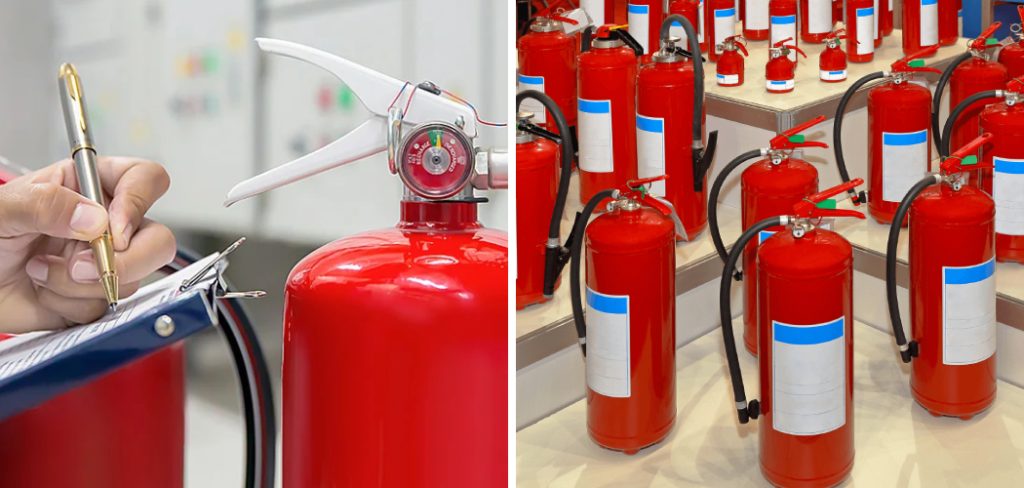
Fire extinguisher maintenance matters because a neglected unit may not work when seconds count. Pressure can drop, hoses can clog, labels can fade, and damage can weaken the cylinder. A quick visual check helps you find these issues before an emergency happens.
Regular care also supports safety rules in homes, businesses, rental properties, and workplaces. Many locations must follow local fire codes, inspection schedules, and service requirements. Your own checks can improve readiness, but they do not replace required inspections or certified servicing.
Good maintenance also builds confidence. When people know where the extinguisher is, what type it is, and how to read its condition, they can respond faster and more calmly.
Step-By-Step Guide To How to Maintain Fire Extinguisher
Step 1: Identify The Extinguisher Type And Class
Start by reading the label on the front of the extinguisher. The label tells you what class of fire the unit is made for. Common ratings include class A for ordinary materials like wood and paper, class B for flammable liquids, and class C for electrical equipment. Some units are marked ABC, which means they cover several common fire types.
If you are learning how to maintain fire extinguisher, this first step matters because the wrong unit in the wrong place can create risk. A kitchen, garage, office, and workshop may need different ratings.
Also check whether the extinguisher is disposable or rechargeable. Rechargeable units can usually be serviced after use, while disposable units are often replaced.
Step 2: Check The Pressure Gauge
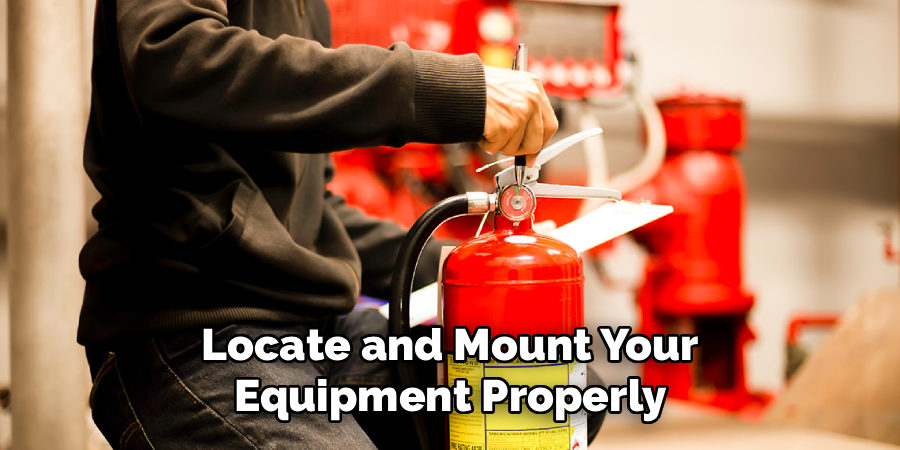
Look at the pressure gauge near the handle. Most portable extinguishers have a needle that should point inside the green zone. This usually means the cylinder has enough pressure to discharge properly. If the needle is below or above the green zone, the extinguisher may not work as expected.
Do not test the pressure by squeezing the handle. Even a short discharge can reduce pressure, break the seal, and require service or replacement.
If the gauge is cracked, missing, fogged, or unreadable, treat the unit as questionable. A rechargeable extinguisher may need professional service. A disposable one may need replacement, depending on the model and condition.
Step 3: Inspect The Safety Pin And Tamper Seal
The safety pin keeps the handle from being pressed by accident. It should be fully inserted through the handle area and should not be bent, loose, or missing. The tamper seal, often made of plastic, should be unbroken. A broken or missing seal may mean someone used or handled the extinguisher.
If the pin is missing, do not assume the unit is still ready. It may have been partly discharged, even if it looks full from the outside.
A damaged seal does not always mean the extinguisher is empty, but it is a warning sign. In a business or public building, report it right away so the unit can be checked by the proper person.
Step 4: Examine The Hose And Nozzle
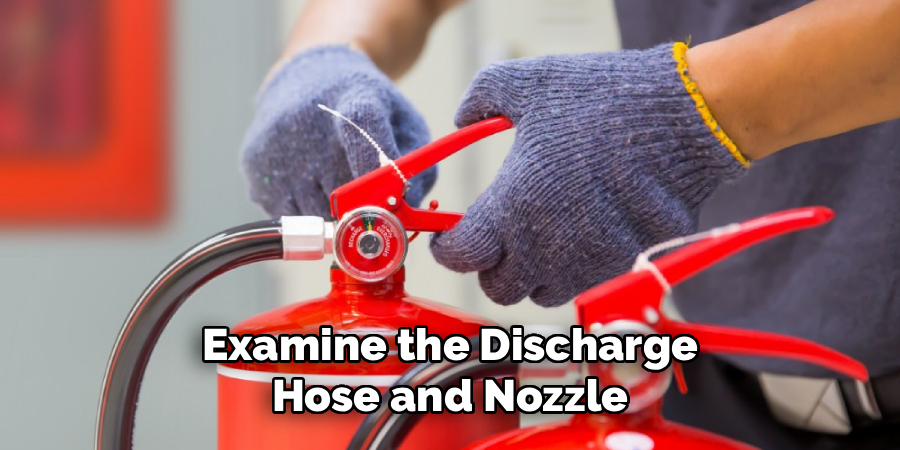
Next, inspect the hose, nozzle, or discharge opening. Make sure the hose is attached firmly and is not cracked, split, crushed, or blocked. Dust, grease, insects, paint, and debris can collect inside the nozzle over time, especially in garages, kitchens, warehouses, and outdoor areas.
Do not push sharp objects deep into the nozzle to clean it. You could damage the part or compact the blockage. Instead, wipe the outside gently and follow the manufacturer’s guidance.
If the hose is brittle or the nozzle appears clogged, the extinguisher may need professional service. A clean discharge path is essential because pressure alone will not help if the agent cannot exit properly.
Step 5: Look For Rust, Dents, Or Leaks
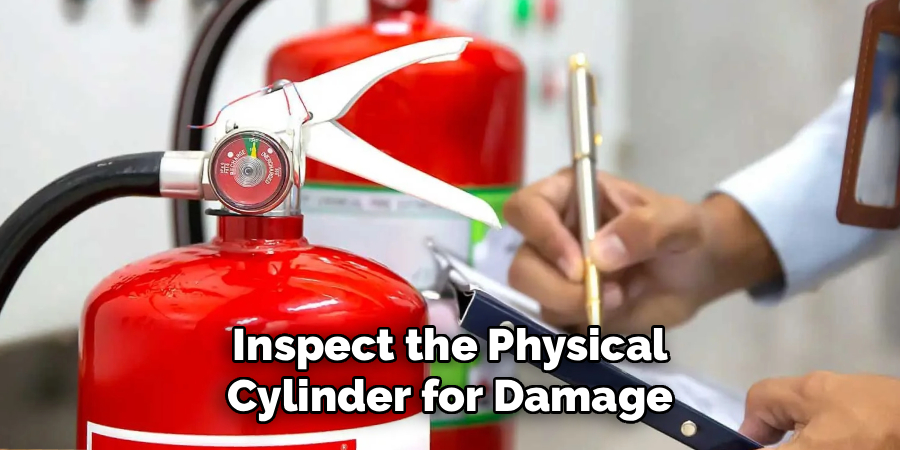
Check the cylinder from top to bottom. Look for rust, deep dents, corrosion, chemical residue, or signs of leakage. Pay close attention to the bottom ring, neck, handle, gauge area, and seams. These areas can show early signs of wear or damage.
A small surface scuff may not be serious, but heavy rust or a deep dent can weaken the cylinder. That can make the extinguisher unsafe, especially because it is stored under pressure.
This is where a practical routine for how to maintain fire extinguisher helps you avoid guessing. If the cylinder looks damaged, do not use it for training or emergencies unless a qualified professional confirms it is safe.
Step 6: Confirm Labels And Instructions Are Readable
The label should be clean, attached, and easy to read. It usually includes the fire class rating, operating instructions, manufacturer details, model information, and safety warnings. If the label is missing or damaged, users may not know whether the extinguisher is right for the fire they face.
Make sure the instructions are facing outward when the unit is mounted. In an emergency, no one should have to remove the extinguisher just to figure out how it works.
Also check the inspection tag if one is attached. In many workplaces and commercial spaces, tags show service dates and inspection records. If the tag is missing, outdated, or unclear, notify the responsible person.
Step 7: Verify Accessible Placement And Mounting
An extinguisher should be easy to see, easy to reach, and close to likely fire risks without being too close to danger. It should not be hidden behind furniture, boxes, tools, coats, doors, or stored items. If people cannot reach it quickly, it may be useless during a fire.
Check that the bracket or wall mount holds the unit securely. The extinguisher should not be sitting loose on the floor where it can tip over, rust, or get buried by clutter.
Also consider height and location. In shared spaces, the extinguisher should be placed where people can find it fast and remove it without special tools.
Step 8: Schedule Service And Know When To Replace
Home checks are helpful, but they do not replace professional servicing when it is required. Many extinguishers need periodic maintenance by qualified technicians, especially in businesses, rental properties, schools, and public buildings. Local codes, insurance rules, and manufacturer instructions may set the schedule.
Rechargeable extinguishers generally need service after any use, even a short discharge. Some may also need internal inspection, recharging, or hydrostatic testing at set intervals. Disposable extinguishers are usually replaced when they are used, damaged, expired, or out of pressure.
A good plan for how to maintain fire extinguisher includes knowing your limits. If you see damage, pressure problems, missing parts, expired dates, or unclear markings, arrange service or replacement before relying on the unit.
Frequently Asked Questions
How Often Should I Check A Fire Extinguisher?
You should visually check a fire extinguisher about once a month, especially in homes, garages, offices, and high-risk areas. Look at the pressure gauge, pin, seal, hose, nozzle, label, and placement. Commercial properties may have stricter inspection rules. Monthly checks help catch obvious problems, but they do not replace required professional inspections or service.
Can I Recharge A Fire Extinguisher Myself?
Most people should not recharge a fire extinguisher themselves. Recharging requires the correct extinguishing agent, proper pressure, special equipment, and safety knowledge. A poorly recharged cylinder may fail, leak, or become dangerous. Rechargeable models should be handled by qualified service providers. Disposable models are usually replaced after use or when pressure is low.
What Should I Do If The Gauge Is Not In The Green Zone?
If the gauge needle is outside the green zone, do not rely on the extinguisher. Low pressure may prevent proper discharge, while overpressure can also signal a problem. For rechargeable units, contact a certified service company. For disposable units, follow the manufacturer’s instructions, which often means replacing the extinguisher rather than trying to repair it.
Does A Fire Extinguisher Expire?
Many fire extinguishers have a recommended service life, inspection schedule, or manufacturer date stamped on the label or cylinder. Some disposable units should be replaced after a set number of years. Rechargeable units may last longer if maintained and tested correctly. Age alone is not the only factor, so also check pressure, damage, service records, and local requirements.
Should I Keep A Fire Extinguisher In The Kitchen?
A kitchen is a smart place to keep an extinguisher, but it should be placed near an exit, not directly beside the stove. That way, you can reach it while keeping a safe escape path behind you. Use a unit rated for common kitchen risks, and make sure everyone in the home knows where it is and when to leave instead of fighting a fire.
Conclusion
Fire extinguisher care is simple, but it plays a major role in safety. You should know the extinguisher type, check the pressure gauge, inspect the pin and seal, examine the hose and nozzle, look for rust or leaks, keep labels readable, and make sure the unit is easy to reach.
You should also know when to stop and call a professional. Required inspections, code compliance, recharging, and pressure testing must be handled according to local rules and manufacturer guidance.
Now that you understand how to maintain fire extinguisher, set a monthly reminder to inspect each unit and take action if anything looks wrong. A few careful minutes today can make a real difference during an emergency.

About
Alexis Kerr is a distinguished figure in the world of professional workspace optimization, with a decade of expertise creating innovative and ergonomic office environments. Her professional focus lies in merging organizational psychology with modern spatial design, fostering office setups that are both high-performing and employee-centric. As the lead author for Deskvity, Alexis Kerr delves into the art and science of corporate aesthetics and functionality, inspiring office managers and remote professionals alike.
Education Cornell University
(Ithaca, New York) Bachelor of Science in Design and Environmental Analysis Focus on human factors, workplace strategy, and sustainable interior environments. Gained extensive experience in how physical space influences productivity and mental clarity.
Savannah College of Art and Design (SCAD)
(Savannah, Georgia) Master of Fine Arts in Interior Design Specialized in commercial workspace solutions with a focus on blending digital integration with physical comfort. Participated in high-level industry projects to refine the balance between corporate branding and architectural utility.
Publications and Impact
In Deskvity, Alexis Kerr shares her insights on modern workspace trends, acoustic management, and strategies for efficient layout planning. Her writing bridges the gap between high-level architectural theory and practical day-to-day office needs, making it a must-read for both facility directors and individual professionals looking to elevate their work environment.